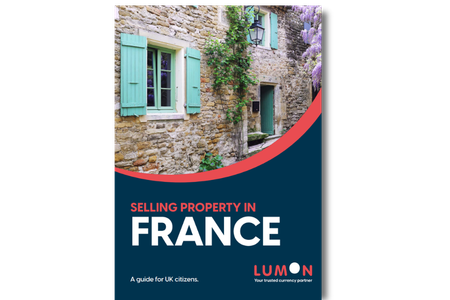
Selling property in France
Selling up in France? Lumon has been helping clients repatriate funds from overseas property sales for 25 years.
Once the sale is done, we’ll help you move your proceeds across borders without the stress and support you to get a competitive exchange rate along the way.
- Moving your proceeds back home
- Local expertise to help navigate France's bureaucracy
- What to consider when selling property in France as a non-resident
- The step-by-step guide for selling property in France as a non-resident
- How to prepare your property for sale
- Tax implications and fees for non-resident sellers
- Brexit impact on UK nationals selling in France
- Frequently asked questions
- Your trusted currency partner
- What our customers are saying
- News and views
- Helping you send the proceeds of your sale home safely
Moving your proceeds back home
Selling property in France as a non-resident? We help you move your money home smoothly, with expert support from sale to transfer.
Repatriate funds, wherever you are

When you’re selling a property in France, we can manage your proceeds locally. That means no need to travel back just to complete the sale.
Hold your proceeds in your Lumon e-wallet

Once your sale is complete, your Lumon e-wallet gives you the option to hold your proceeds in euros, giving you time to choose the right moment to transfer.
Competitive exchange rates

With decades of currency experience, our specialists provide market insights to help you secure a competitive rate and get more from your sale.

Local expertise to help navigate France’s bureaucracy
France’s legal process can be complex, but our local expertise helps you avoid delays and repatriate your funds.
Support at every step: From required paperwork and notaire formalities to local banking, we manage the sale process remotely so you can sell with confidence from abroad.
In-country banking support: If a French bank account is needed to release funds, we can set this up so your money is transferred securely without travel.
The power of local partnerships: Working with trusted legal and financial contacts in France, we handle every formality and transfer smoothly, so you can focus on what’s next.

What to consider when selling property in France as a non-resident
When to sell: Your timing depends on your next move. In France, sales often take 3–6 months, so factor this into your plans.
Pricing your property: Base your price on what you paid and recent sale prices for similar homes in your area.
Converting your proceeds: If you’re moving money home, the exchange rate will affect your final amount. Even small changes in the rate can have a big impact.
Selling costs: Allow for notary fees, agent commissions, and any Capital Gains Tax that may apply.

The step-by-step guide for selling property in France as a non-resident
1. Choosing between an estate agent or private sale
Start by getting your property valued, either by a local estate agent or an independent expert, and set a competitive price. Tidy up, carry out any small repairs, and gather essential documents like the title deed, diagnostic reports, and co-ownership paperwork (if relevant). Then decide whether to sell privately or through an agent.
2. How to market your property to the right buyers
Create a listing on the right platforms, or use an agent’s expertise to market your property more widely. Be ready to accommodate viewings and answer any buyer questions.
3. Negotiating offers: cultural tips for success
Once you start receiving offers, be prepared for a negotiation process that may feel a little different from the UK. In France, offers are typically made in writing, and negotiations tend to be more formal and slower-paced. Buyers often expect a bit of back-and-forth, so it’s wise to stay patient and open to reasonable counteroffers.
It’s also common for buyers to make offers below the asking price, especially in slower markets, so don’t be discouraged. Working with a local agent or advisor can help you understand what’s typical in your region and guide you toward a fair outcome.
4. Signing the 'Compromis de Vente' and handling the deposit
When you reach an agreement, you’ll sign the ‘Compromis de Vente’, a binding pre-sale contract. After final checks, the ‘Acte de Vente’ is signed at the notaire’s office to complete the sale.
5. Legal and financial steps
You’ll need a notaire to manage the legal side of the sale and ensure all requirements are met. This includes completing diagnostic reports and understanding your tax obligations, like capital gains. Make sure all costs and payments are settled before the final handover.
6. Finalising the sale with the 'Acte de Vente'
Once everything’s in place, the keys are handed over to the buyer. But first, the ‘Acte de Vente’, the final deed of sale, is signed at the notaire’s office. This official document confirms the legal transfer of ownership and completes the sale. The notaire will check that all conditions have been met before both parties sign.

How to prepare your property for sale
Set up a listing: Before putting your French property on the market, you’ll need to prove legal ownership. This usually includes the title deed and recent property tax receipts.
Get your documents in order: Selling in France involves paperwork, from energy certificates to proof that local taxes and utilities are paid. We can help you stay on top of what’s needed.
Plan for the financial side: Account for legal fees, agent commissions, and exchange rate impacts. If you’re moving funds back to the UK, a currency specialist can help you keep more of what your property is worth.
Tax implications and fees for non-resident sellers
When you sell your property in France, awareness of extra costs and tax implications can save you any surprises.
Capital Gains tax
If you sell your French property for more than you originally paid, you may be liable for capital gains tax (plus-value immobilière). The rate depends on how long you’ve owned the property, with exemptions available after a certain period.
You may also deduct allowable costs, such as agent fees and qualifying renovation work, to reduce the taxable gain. Non-resident sellers are typically required to appoint a fiscal representative if the sale exceeds €150,000.
Wealth tax (IFI)
If the total value of your real estate assets in France exceeds €1.3 million, you may be subject to Impôt sur la Fortune Immobilière (IFI), France’s real estate wealth tax.
This tax is assessed annually, but it may also come into play when selling if you remain liable during the ownership period. It’s worth checking your position with a tax adviser, especially if you hold multiple properties in France.
Notary fees
A notaire is legally required to oversee the transaction and register the sale. While notary fees are usually paid by the buyer, the seller may still be responsible for certain administrative or discharge costs, such as mortgage cancellation or additional document preparation.
These are often modest but should be accounted for when estimating your final return.

Brexit impact on UK nationals selling in France
New tax requirements: UK residents selling in France may now need to appoint a fiscal representative for Capital Gains Tax if the sale exceeds €150,000.
Visa and travel limitations: As a non-EU resident, you’re now limited to 90 days in any 180-day period in the Schengen Zone. This can affect your ability to manage viewings or complete in-person paperwork.
Longer administrative timelines: Post-Brexit rules mean added layers of admin and potential delays, especially if documents need to be translated or notarised.
Your trusted currency partner
Our team of currency specialists have the local market knowledge to help you navigate the process of buying a property in France. With our international real estate expertise, we’re here to help make the process simple.

Bank-beating exchange rates* and no transfer fees

Cared for over 70,000 customers since 2000

Award-winning service

International property specialists
Frequently asked questions
How can I sell a property in France from the UK?
You can sell your French property from the UK, but you’ll need the right support on the ground. It’s common to appoint a bilingual lawyer and grant power of attorney (procuration) to handle paperwork and sign documents on your behalf.
In many cases, a French bank account is also required, as notaires may be unable or unwilling to transfer sale proceeds directly to an overseas account. With the right arrangements in place, the entire process can be managed remotely.
How much tax do you pay when selling a house in France?
If you’re selling a property in France as a non-resident, you may need to pay tax on any profit you make. The amount depends on how long you’ve owned the property, and some exemptions or reductions may apply.
You could also be responsible for local taxes, and in some cases, you may need to appoint a fiscal representative to manage the process.
How to avoid capital gains tax in France on property?
There are some situations where you may be able to reduce or avoid capital gains tax, such as if the property was your main residence, or if you’ve owned it for a long time.
In some cases, certain costs related to improvements or legal fees may also help reduce your tax bill. Tax rules can be complex and subject to change, so it’s best to speak to a tax adviser for advice based on your specific situation.
Who pays the Notaire fees when selling a house in France?
In France, notaire fees are typically paid by the buyer. However, the seller may still incur some legal or administrative costs, especially if extra services are required or if a fiscal representative is needed.
The notaire acts on behalf of the state, not either party, so their role is neutral but essential to the sale process.

Supporting our customers
Once the house was sold and the funds made available to Lumon, they quickly and securely converted them into sterling and transferred them into our UK account.


*Bank-beating exchange rates
Get more for your money with great value on every transfer. We offer bank-beating exchange rates, no transfer fees, and award-winning service you can rely on.
See how we compareWhat our customers are saying



The information provided is for general information purposes and does not constitute legal, tax or other professional advice from Lumon, and it is not intended as a substitute for obtaining advice. It is recommended you seek professional advice from a financial advisor or any other professional.
Your guide to selling a property abroad
Our selling property guide is packed with information and resources to support you, including:
- Key considerations before putting your property on the market
- Information on taxes, legal processes and required paperwork
- A handy checklist to help keep your sale on track
- Useful tips to help make the selling process as smooth as possible